
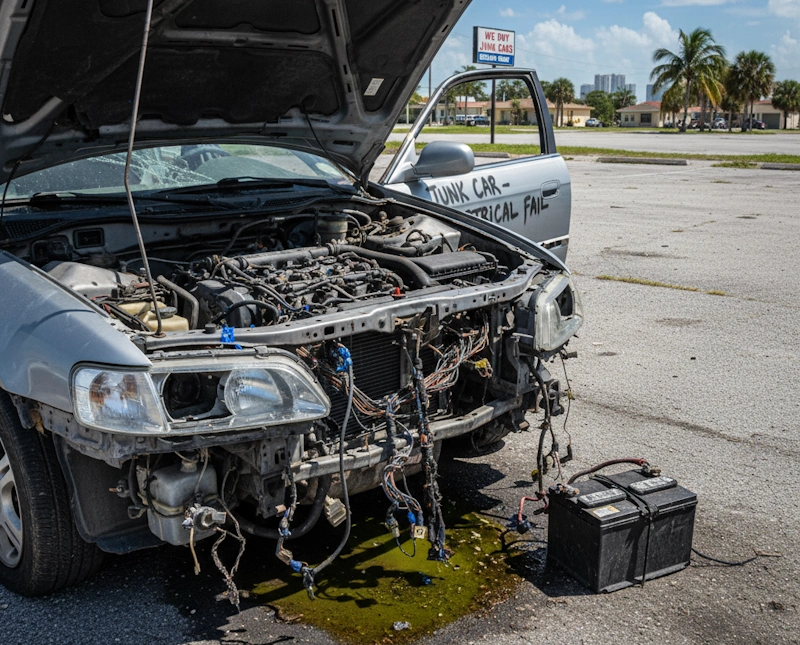
Electrical trouble can turn a dependable vehicle into a frustrating problem fast. One day, your car may start slowly. The next day, it may not start at all, the dashboard may light up with warning signals, or important systems may stop working.
Some electrical repairs are simple and affordable. Others can cost more than the vehicle is worth. When that happens, many owners begin looking at electrical problems that can junk a car in Delray Beach and deciding whether it makes more sense to repair the vehicle, sell it privately, or get cash for it as-is.
Florida heat, humidity, heavy rain, and flooding can all take a toll on a vehicle’s wiring, battery, and electronic systems. Below are some of the most common car electrical issues that may lead someone to junk an unwanted vehicle.
When Electrical Problems Become Too Expensive to Fix
A car does not have to be completely dead to become a junk car. Sometimes, the vehicle still runs, but the cost of repairs no longer makes financial sense.
For example, an older vehicle may need a new alternator, a new battery, wiring repairs, and a computer diagnosis all at the same time. Even if each repair seems manageable on its own, the final bill can add up quickly.
You may want to consider selling your car for cash if:
- The repair estimate is close to or higher than the car’s value
- Your vehicle has repeated electrical problems
- The car will not start consistently
- Warning lights keep coming back after repairs
- The wiring has water damage or corrosion
- The vehicle has other issues, such as engine trouble, transmission problems, or body damage
- You do not want to keep spending money on an unreliable car
For many drivers, electrical problems that can junk a car in Delray Beach are not about one bad fuse. They are about a car that has become too costly and stressful to keep.
Common Electrical Problems That Can Junk a Car in Delray Beach
A Dead or Failing Battery
A dead battery is one of the most common reasons a car will not start. In many cases, replacing the battery solves the problem. However, repeated battery failure can point to a larger issue.
Your battery may keep dying because of:
- A bad alternator
- Corroded battery terminals
- Loose battery cables
- A parasitic drain
- A wiring issue
- An electrical accessory that does not turn off properly
If you replace the battery but the car still loses power, the real issue may be harder to find. Electrical diagnosis can take time, and labor costs can rise when the problem is hidden inside the vehicle’s wiring system.
A Bad Alternator
The alternator helps keep the battery charged while the engine is running. When the alternator fails, your car may start losing power while you drive.
Common signs of a failing alternator include:
- Dim headlights
- A battery warning light on the dashboard
- Flickering interior lights
- Strange noises under the hood
- A burning smell
- Power windows or locks are working slowly
- A vehicle that stalls or will not restart
A new alternator may be worth replacing on a newer vehicle in good condition. But on an older car with several problems, the repair may not be worth the cost. This is one of the electrical problems that can junk a car in Delray Beach when the vehicle already has low resale value.
Damaged Wiring or Wiring Harness Problems
Your vehicle has miles of wiring that connect important systems, including lights, ignition components, sensors, power locks, windows, air conditioning, and the engine control module.
When the wiring harness becomes damaged, the results can be unpredictable. Your car may start one day and fail the next. It may have dashboard warning lights, electrical shorts, blown fuses, or systems that stop working without warning.
Wiring damage can happen because of:
- Age and normal wear
- Rodents chewing wires
- Accident damage
- Water intrusion
- Corrosion
- Poor previous repairs
- Florida heat and humidity
Wiring repairs can be expensive because technicians often need to spend hours finding the damaged section. In some cases, replacing a full wiring harness may cost more than the car is worth.
Blown Fuses That Keep Coming Back
A single blown fuse is usually not a major concern. Fuses are designed to protect electrical circuits. Replacing one can be quick and inexpensive.
However, a fuse that keeps blowing may signal a deeper electrical short. This can happen when wires are damaged, exposed, or connected incorrectly. It may also be linked to a failing electrical component.
If your vehicle keeps blowing fuses for the headlights, radio, power windows, or ignition system, it is important to find the cause. Replacing the fuse over and over does not solve the actual problem.
Faulty Starter or Ignition System
A car that clicks but does not start may have a starter problem, battery issue, ignition switch problem, or damaged wiring. These issues can be confusing because several parts of the electrical system work together to start your vehicle.
Signs of a starter or ignition issue may include:
- Clicking sounds when turning the key
- No response when pressing the start button
- The dashboard lights turn on, but the engine does not crank
- The vehicle starts only sometimes
- The key gets stuck or feels loose in the ignition
A starter repair may be reasonable on its own. But when it is combined with other electrical failures, it may be time to think about selling the vehicle instead of continuing to repair it.
Water Damage and Electrical Failures
Water damage can create some of the most serious electrical problems in a vehicle. Delray Beach drivers know that sudden downpours, standing water, and flooding can happen during Florida’s rainy season.
Water can get into connectors, wiring, sensors, fuse boxes, and electronic control modules. Even after the car dries out, corrosion may continue to spread.
Signs Your Car May Have Water-Related Electrical Damage
Watch for these warning signs after driving through deep water or dealing with flooding:
- Multiple dashboard warning lights
- Power windows, locks, or mirrors stop working
- Musty smells inside the vehicle
- Flickering lights
- Electrical systems are working on and off
- A car that will not start after the rain
- Rust or corrosion around connectors and wiring
Water-related electrical damage can be difficult to repair because the full extent of the problem may not show up right away. A vehicle may seem fine for weeks before new issues appear.
Computer and Sensor Problems in Modern Cars
Modern cars rely on computers, sensors, modules, and electronic control units to manage many everyday functions. These systems can improve performance and safety, but they can also be costly to diagnose and replace.
A bad engine control module, body control module, or sensor may cause:
- Check engine lights
- Poor fuel economy
- Rough idling
- Stalling
- Transmission shifting issues
- Starting problems
- Loss of communication with other vehicle systems
In some vehicles, the repair is not just about replacing one part. The replacement module may need to be programmed or matched to the car. This can increase the total cost.
For an older vehicle with a low market value, electronic control module repairs may be one of the biggest electrical problems that can junk a car in Delray Beach.
Should You Repair or Junk a Car With Electrical Problems?
Before deciding what to do, consider the full picture. Do not only look at the current repair estimate. Think about the vehicle’s condition, mileage, history, and future needs.
Repairing May Make Sense When:
- Your vehicle is newer and in otherwise good condition
- The electrical issue is clearly identified
- The repair cost is reasonable
- The car has strong resale value
- You have not had repeated major problems
Junking or Selling the Car May Make More Sense When:
- The electrical issue is difficult to diagnose
- The wiring damage is widespread
- The car has flood damage
- Repairs cost more than the vehicle is worth
- The car has multiple major mechanical problems
- You are tired of repeated breakdowns
- The vehicle is sitting unused in your driveway
If you are dealing with electrical problems that can junk a car in Delray Beach, you do not have to keep putting money into a vehicle that no longer works for your needs.
What to Do Before Selling a Car With Electrical Problems
Selling a vehicle with electrical issues can be easier when you take a few simple steps first.
1. Gather Basic Vehicle Information
Have the year, make, model, mileage, and VIN ready. It also helps to know whether the vehicle starts, rolls, has keys, and has a title available.
2. Be Honest About the Problem
Tell the buyer about any known electrical issues. For example, mention if the car has a dead battery, a bad alternator, wiring damage, dashboard warning lights, or a no-start problem.
3. Remove Personal Belongings
Check the glove box, center console, trunk, under the seats, and door pockets. Remove registration papers, toll passes, garage remotes, and personal items.
4. Ask About the Pickup Process
Before accepting an offer, ask how the vehicle will be picked up and whether towing is included. This is especially important if the car does not start or cannot be driven safely.
Sell Your Junk Car in Delray Beach Without the Stress
A car with serious electrical issues can become more than an inconvenience. It can take up space, drain your budget, and leave you wondering whether the next repair will finally fix the problem.
Instead of spending more money on an unreliable vehicle, contact Hercules Buys Junk Cars to request a quote for your unwanted car, truck, SUV, or van. Whether your vehicle has a dead battery, a bad alternator, wiring damage, or other electrical trouble, you can explore a simple way to sell it as-is.
Get Cash for a Car With Electrical Problems
Electrical problems do not always mean your vehicle has no value. Even cars that do not start may still have value based on their make, model, condition, and recoverable materials.
When you are ready to move on from a vehicle that has become too expensive to repair, visit Hercules Buys Junk Cars or call to learn how to sell your unwanted vehicle in South Florida. A quick quote can help you decide whether selling the car is the better option.
We Buy Junk Cars in Delray Beach in Any Condition
Electrical issues are just one reason people sell to us. We buy junk cars in Delray Beach, whether they’re running or not, damaged, wrecked, or completely dead.
If you’re dealing with:
- A dead battery that keeps draining
- A short circuit that’s impossible to trace
- A fried alternator or starter
- Computer errors that never stop popping up
We’ll still buy your car and pay you cash for it. No repairs, no stress, and no waiting.
What Local Vehicle Owners Say About Selling to Hercules Buys Junk Cars
Dealing with a car that has electrical problems can be stressful, especially when it will not start, has warning lights on the dashboard, or keeps needing costly repairs. Hearing from other local vehicle owners can make the decision easier.
” Carl was very accommodating, friendly and offered top dollars for my car. You won’t regret your decision to choose his services. “- Ardnat Evagoldo
Frequently Asked Questions About Car Electrical Problems
Can electrical problems total a car?
Yes. Electrical problems can make a car too expensive to repair, especially when the vehicle has major wiring damage, flood damage, computer issues, or several problems at once.
Is a bad alternator enough reason to junk a car?
Not always. A bad alternator can often be replaced. But if the car also has other expensive repairs, high mileage, engine trouble, or transmission problems, selling it may make more sense.
Can water damage cause electrical problems in a car?
Yes. Water can damage wiring, connectors, fuse boxes, sensors, and computer modules. Some problems may not appear until days or weeks after the vehicle is exposed to water.
What does it mean when my car has several warning lights on?
Multiple warning lights can point to a battery, alternator, wiring, sensor, or computer issue. A diagnostic inspection can help identify the cause.
Can I sell a car that will not start?
Yes. Many junk car buyers in Delray Beach purchase vehicles that do not start, have electrical problems, or are no longer safe or practical to drive.